
Table of Contents+
- AI Visibility Audit and Report for Acyclic Hydrocarbon Manufacturers
- How I Score the AI Visibility Audit and Report for Acyclic Hydrocarbon Manufacturers
- A Chemical Manufacturer Can Be Recognized Without Being Understood
- Does AI Distinguish Your Products From Similar Chemicals?
- Manufacturing Capacity Is Not the Same as Available Supply
- Can AI Identify Your Actual Production Capabilities?
- Why Storage and Transportation Matter to AI Recommendations
- How Industrial Buyers Find and Evaluate Hydrocarbon Suppliers
- What Happens When AI Confuses a Manufacturer With a Distributor?
- Can AI Understand Your Technical Specifications?
- How AI May Misrepresent Your Competitive Position
- What Your AI Visibility Audit and Report Examines
- The Information That Deserves Your Attention
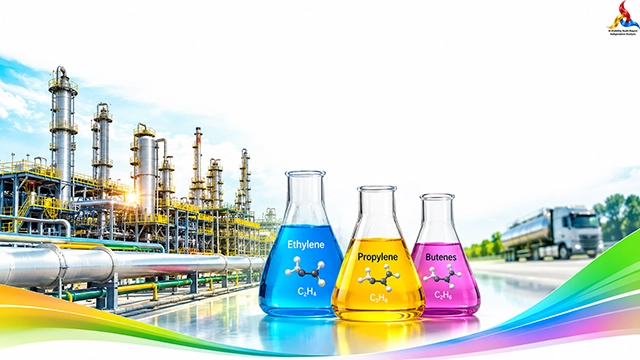
AI Visibility Audit and Report for Acyclic Hydrocarbon Manufacturers
For manufacturers producing acyclic hydrocarbons such as ethylene, propylene, and butenes from refined petroleum or liquid hydrocarbons, the $495 AI Visibility Audit and Report investigates whether ChatGPT, Claude, and Gemini accurately understand your products, production capabilities, industrial customers, and commercial availability. Order your AI Visibility Audit and Report to receive an independent assessment of how these platforms represent your manufacturing business.
How I Score the AI Visibility Audit and Report for Acyclic Hydrocarbon Manufacturers
| Scoring category | What I assess for your manufacturing business | Points available |
|---|---|---|
| Does AI understand what your business is? | Whether AI correctly identifies you as an acyclic hydrocarbon manufacturer rather than confusing your operations with petroleum refining, natural gas extraction, or finished plastics manufacturing. | 20 |
| Does AI understand what you actually sell or provide? | Recognition of your specific hydrocarbon products, grades, processing capabilities, and whether materials are available to outside customers. | 20 |
| Does AI understand who your business serves? | Whether AI identifies your relevant industrial customers, including chemical processors, polymer manufacturers, and commercial buyers of petrochemical feedstocks. | 15 |
| Does AI understand what makes you different? | Recognition of documented production methods, purification capabilities, product specifications, storage infrastructure, and distribution arrangements. | 15 |
| Does AI understand when your business belongs in a recommendation? | Whether AI recognizes your suitability for inquiries involving specific chemicals, purity requirements, industrial applications, and supply arrangements. | 15 |
| Is AI presenting incorrect, missing, or confused information? | Identification of unsupported product claims, confusion between chemical grades, incorrect availability assumptions, and outdated facility information. | 10 |
| Do ChatGPT, Claude, and Gemini agree about your business? | Whether the three platforms consistently recognize your products, manufacturing activities, and commercial capabilities. | 5 |
| Total | 100 |
A Chemical Manufacturer Can Be Recognized Without Being Understood
An industrial buyer looking for ethylene, propylene, or a particular butene product needs more than the name of a petrochemical company. The buyer needs to establish whether that company produces the required molecule, whether the material meets the intended specification, and whether the manufacturer can actually supply it.
Those distinctions are particularly important in acyclic hydrocarbon manufacturing.
A company might manufacture ethylene for its own downstream operations, sell selected olefins to outside customers, and operate additional facilities producing chemicals that are unrelated to a buyer’s immediate requirements.
An AI platform could accurately identify that company as a petrochemical manufacturer while incorrectly presenting its entire product portfolio as commercially available.
That is a meaningful difference between recognizing a business and understanding what the business offers.
For an acyclic hydrocarbon manufacturer, useful AI visibility depends on whether the platform can distinguish your actual production activities from the broader operations of your parent company, affiliated facilities, or other businesses within the petrochemical industry.
Does AI Distinguish Your Products From Similar Chemicals?
The names used in this industry can create confusion when an AI platform interprets a manufacturer’s products.
Ethylene and ethene refer to the same molecule. Propylene and propene are alternative names for another. Butenes, however, describe a family of related compounds whose individual members are not interchangeable for every industrial application.
A manufacturer supplying purified 1 butene serves different requirements from one selling a mixed C4 hydrocarbon stream. High purity isobutylene also has applications that differ from those of other butene products.
These distinctions matter because industrial customers evaluate chemical identity, composition, purity, and suitability for their processes.
Consider three possible AI responses to a buyer asking about suppliers of 1 butene:
- The platform identifies companies associated with C4 hydrocarbon processing without determining which ones actually supply purified 1 butene.
- It recommends a manufacturer whose product portfolio includes mixed butenes, treating the mixture as equivalent to the requested chemical.
- It identifies manufacturers offering the specified molecule and distinguishes their documented commercial products from other C4 streams.
The third response provides a more useful starting point for supplier evaluation.
My investigation examines whether AI understands your documented product distinctions rather than grouping every related hydrocarbon under a broad chemical category.
Manufacturing Capacity Is Not the Same as Available Supply
One of the most important questions an industrial buyer can ask is whether a manufacturer actually sells the material it produces.
Large petrochemical companies frequently operate integrated manufacturing systems. Ethylene or propylene produced at one facility may be transferred directly into another manufacturing process rather than offered to outside customers.
Other producers sell part of their output through established commercial arrangements while consuming the remainder internally.
An AI platform that finds a production capacity figure cannot automatically conclude that the corresponding quantity is available for purchase.
For example, a manufacturer could operate a substantial ethylene production facility while committing most of its output to internal polymer manufacturing or existing supply contracts.
If AI recommends that facility as a source of available merchant ethylene without supporting evidence, the response may mislead a prospective buyer.
The audit examines whether ChatGPT, Claude, and Gemini distinguish among:
- Chemicals a company manufactures.
- Products it explicitly markets to outside customers.
- Materials consumed within its own manufacturing operations.
- Commercial availability that cannot be established from publicly accessible information.
The objective is not to determine your current inventory or uncommitted production capacity. It is to establish whether AI accurately represents the commercial information it can find about your business.
Can AI Identify Your Actual Production Capabilities?
Not every acyclic hydrocarbon manufacturer produces its chemicals through the same process.
Steam cracking can generate ethylene alongside other hydrocarbon products. Propane dehydrogenation provides a different production route for propylene. Specialized processing facilities can separate and purify mixed C4 streams into individual products.
These operations represent different manufacturing capabilities, even when their products overlap.
For an industrial buyer, the distinction can help explain a supplier’s product portfolio, manufacturing specialization, and potential suitability.
An AI platform might correctly associate your company with propylene while failing to recognize that your facility specializes in fractionation rather than producing propylene through a dedicated conversion process.
Another platform might describe your company as a general petrochemical producer while overlooking documented C4 separation or purification capabilities.
The audit examines whether these manufacturing distinctions are understood when they are relevant to your business.
It also considers whether AI incorrectly attributes capabilities from one corporate facility to another. A company’s ownership of several petrochemical operations does not mean every location produces the same materials.
Why Storage and Transportation Matter to AI Recommendations
Industrial hydrocarbon supply involves physical infrastructure that can determine whether a commercial relationship is practical.
Depending on the chemical and supply arrangement, manufacturers may rely on pipelines, terminals, underground storage, marine transportation, or other specialized handling systems.
A manufacturer with access to an established ethylene pipeline network may serve a different customer population from a supplier whose product distribution depends on another transportation arrangement.
These differences are not merely logistical details. They can influence which customers a manufacturer can realistically serve.
Imagine an industrial buyer asking an AI assistant to identify potential ethylene suppliers for a facility requiring pipeline delivery.
A useful response should distinguish manufacturers with documented access to relevant infrastructure from companies that simply produce ethylene somewhere in their operations.
The AI platform should not assume that a producer can deliver to a particular facility merely because both businesses operate in the same region.
My audit investigates whether the platforms recognize your publicly documented storage, transportation, and distribution capabilities without inventing delivery arrangements or geographic coverage.
How Industrial Buyers Find and Evaluate Hydrocarbon Suppliers
The research process for purchasing industrial chemicals is different from ordinary consumer shopping.
Potential customers may begin with established supplier relationships, technical product directories, industry contacts, manufacturer websites, or direct inquiries to commercial sales teams.
An AI assistant may also be used to investigate a potential supplier or assemble an initial list of manufacturers worth contacting.
For example, a procurement professional could ask:
- Which manufacturers produce polymer grade propylene?
- What companies offer high purity isobutylene for chemical manufacturing?
- Which suppliers manufacture purified 1 butene for polyethylene production?
- Does a particular petrochemical company sell ethylene to outside customers?
- What manufacturing and distribution capabilities does a named supplier have?
These are examples of possible research questions, not claims about how frequently industrial buyers use AI.
A manufacturer could appear in a general search for petrochemical companies yet be absent when a buyer asks about a specific product or supply capability.
Conversely, an AI platform might recommend a company based on an outdated product listing or information belonging to another facility.
The audit evaluates whether your business is appropriately understood in the context of the products and customers you actually serve.
What Happens When AI Confuses a Manufacturer With a Distributor?
Acyclic hydrocarbons can reach industrial customers through several commercial arrangements.
Some companies manufacture and sell their own products. Others process materials obtained from another producer. Commercial intermediaries may arrange supply without operating the manufacturing facilities themselves.
These distinctions affect what a potential customer can reasonably expect from a business.
A buyer looking for a manufacturer with direct production capabilities may not want a list consisting entirely of chemical distributors.
Likewise, a customer seeking a particular supply arrangement may benefit from identifying companies that provide processing, storage, or commercial coordination services.
AI should not automatically classify every company selling ethylene or propylene as the original manufacturer.
For businesses operating across several parts of the supply chain, accurate representation also means recognizing those separate activities rather than reducing the company to a single generic description.
This is particularly relevant to independent processors and manufacturers offering specialized purification or fractionation services.
Can AI Understand Your Technical Specifications?
A hydrocarbon product name alone does not establish whether the material is suitable for a particular industrial process.
Product specifications may address chemical composition, minimum purity, maximum contaminant concentrations, and other characteristics relevant to the intended application.
Industrial buyers can examine technical specifications and supporting product documentation when qualifying a supplier.
An AI platform may encounter several different kinds of information, including published typical values, formal product specifications, and descriptions of individual chemical grades.
Those documents are not necessarily interchangeable.
For example, a published typical purity value does not establish that every shipment meets a particular contractual specification.
Similarly, an AI platform should not infer that a manufacturer can satisfy an unusually restrictive contaminant limit merely because the company produces the requested molecule.
The audit examines whether the platforms accurately interpret the technical information available about your products.
It also identifies situations where the platforms make unsupported claims about purity, grade availability, or suitability for particular applications.
How AI May Misrepresent Your Competitive Position
Competition in acyclic hydrocarbon manufacturing cannot be reduced to a comparison of company names.
Two manufacturers may produce the same molecule while differing substantially in product grades, processing capabilities, customer relationships, and distribution infrastructure.
One may focus on supplying merchant ethylene. Another may produce ethylene primarily for internal consumption. A third may specialize in processing C4 streams for customers requiring individual chemical components.
An AI platform that treats these businesses as equivalent may overlook important differences.
That can affect how it answers questions about potential suppliers.
A platform might emphasize the size of a corporation while overlooking a smaller processor whose documented capabilities more closely match a specific industrial requirement.
Alternatively, it might recommend a specialized processor for an application outside that company’s published product range.
A useful recommendation depends on the buyer’s actual requirements, not simply the prominence of the manufacturer’s name.
For businesses seeking a direct comparison with a named competitor, the separate $895 AI Visibility Audit and Competitive Comparison provides two complete investigations and a separate report comparing the findings across ChatGPT, Claude, and Gemini.
What Your AI Visibility Audit and Report Examines
I investigate your business through structured questions presented independently to ChatGPT, Claude, and Gemini.
The assessment looks beyond whether the platforms recognize your company name.
For an acyclic hydrocarbon manufacturer, the investigation considers whether the platforms understand your actual products, relevant industrial applications, manufacturing activities, customer relationships, and publicly documented commercial capabilities.
I also examine whether they confuse your company with other manufacturers, attribute unsupported capabilities to your facilities, or present uncertain information as established fact.
Each platform’s findings are evaluated through the seven scoring categories shown at the beginning of this article.
The completed report includes the individual platform findings, differences and areas of agreement, recommendations generated by each platform, and my independent recommendations based on the investigation.
You receive a written assessment that helps distinguish accurate representation from missing information, unsupported assumptions, and potentially misleading descriptions.
You can read more about the investigation process on the Our Approach page.
The Information That Deserves Your Attention
For an acyclic hydrocarbon manufacturer, an AI visibility problem may be subtle.
Your company might be correctly identified as a petrochemical producer while the platforms misunderstand which molecules you manufacture, which grades you supply, or whether your products are commercially available.
The company name may be right while the information needed for an industrial purchasing decision is wrong.
That is why the distinction between general recognition and accurate business understanding matters in this industry.
An independent investigation can establish what ChatGPT, Claude, and Gemini currently communicate about your business and identify which findings deserve further attention.
The resulting information gives you a documented basis for deciding whether your public product descriptions, facility information, commercial availability statements, or other business information need clarification.
Article prepared by Frank Masotti, independent AI visibility analyst and founder of AI Visibility Audit and Report. Learn more about Frank Masotti. For questions about the reports, visit the Contact page.

About Frank Masotti and his experience
Frank Masotti personally conducts every AI Visibility Audit and Report for Acyclic Hydrocarbon Manufacturers.